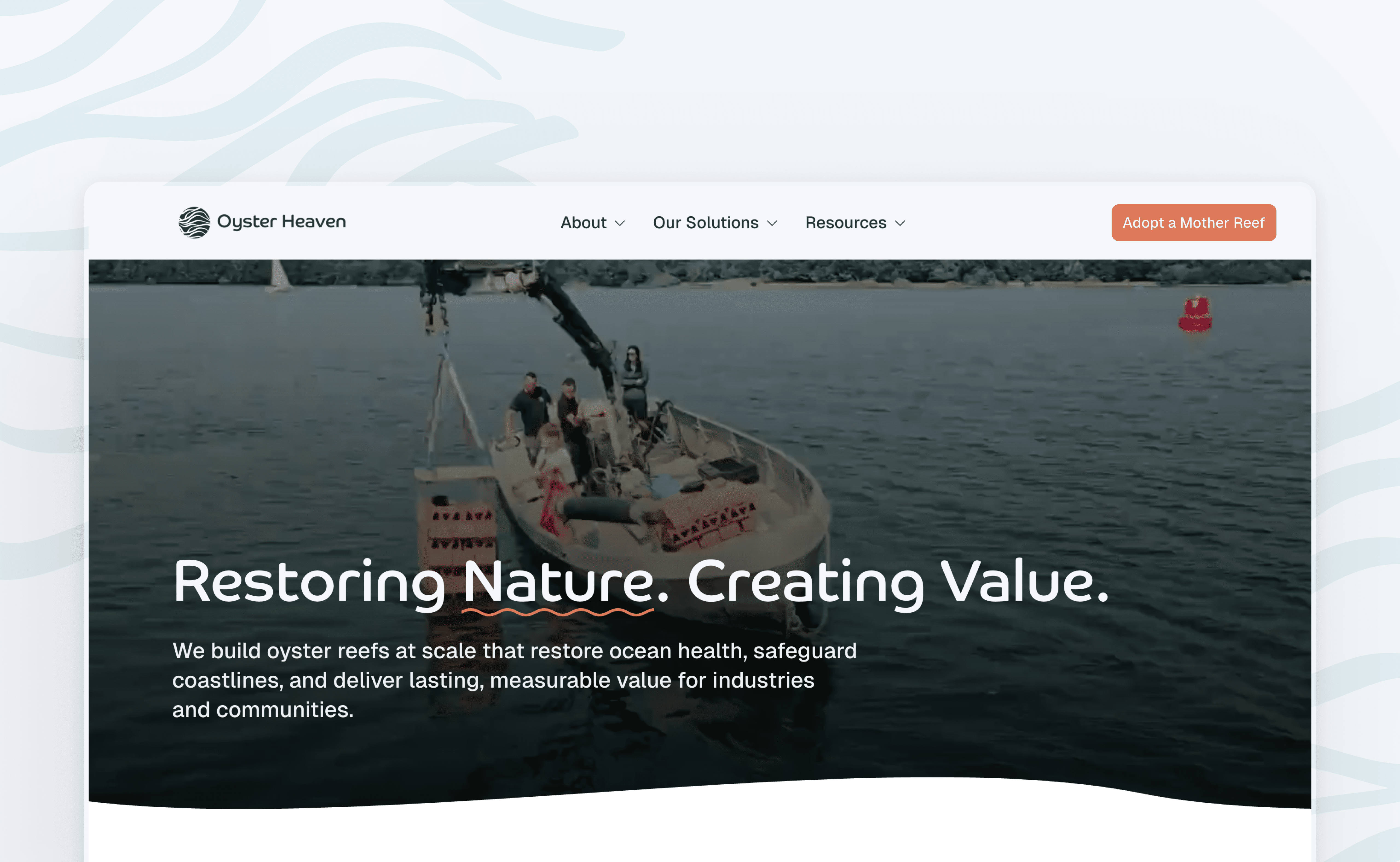

As I take on more projects at Concealed, I've come to understand that they reach us in many different ways. Oyster Heaven came to us with a website that didn't match where they were headed. Over four weeks we redesigned every page in Framer — rebuilding structure, simplifying copy, and handing over a site their team could manage independently from day one. Here's how the project ran and what it taught me.
From the start, the goal of the project was clear: redesign Oyster Heaven's entire website, building on the already established brand, to create something cleaner, clearer and truly reflective of where they are headed.
Understanding the existing site before touching the design
Before the project kicked off, I started by looking and analyzing their current website. My first impression was that it felt cluttered and hard to scan. Pages were built around large blocks of text instead of focusing on the visuals. Not only this, but the inconsistency across pages and lack of dynamism between sections made it clear that, while Oyster Heaven's brand already had the character the organization needed, their website wasn't able to carry that through consistently.
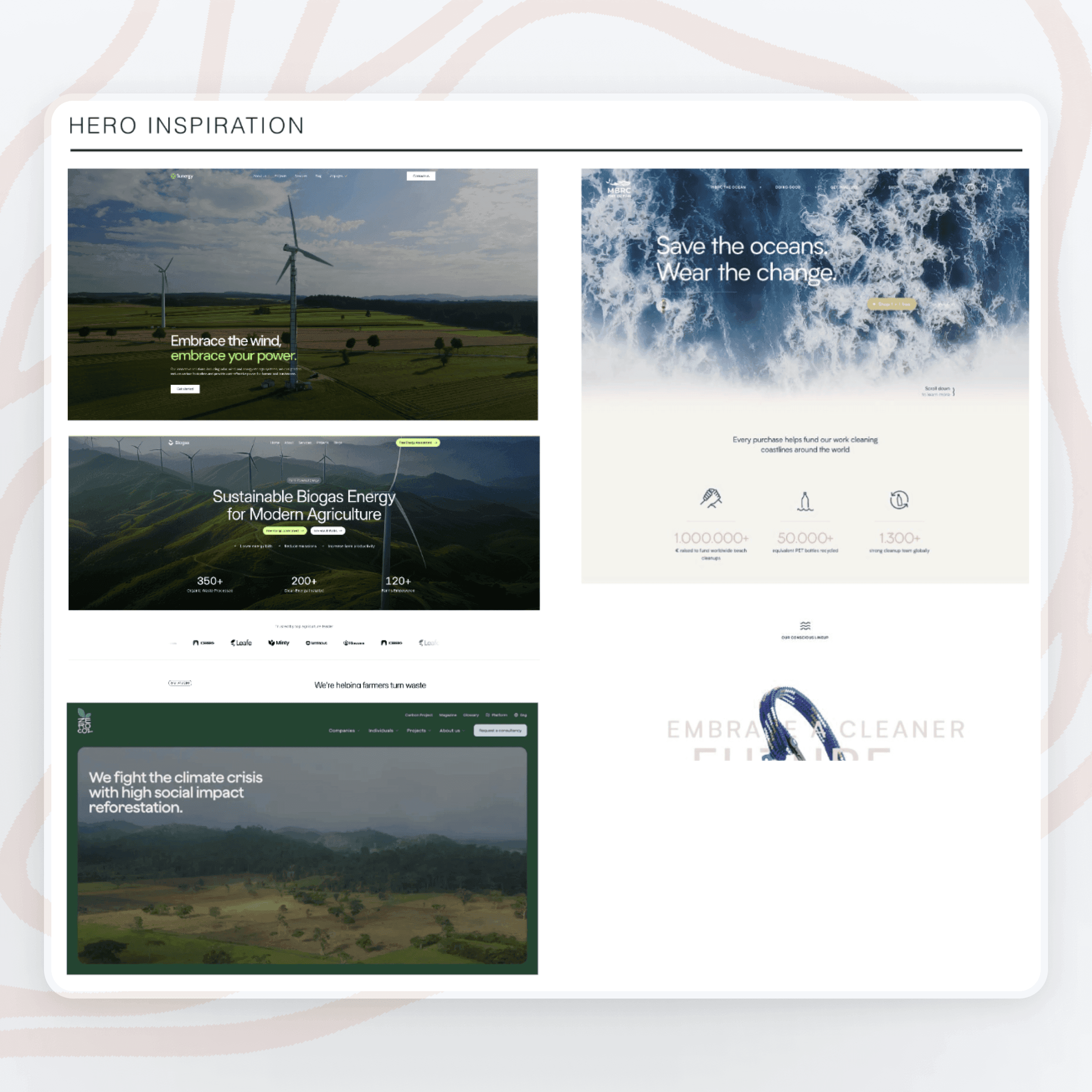
Thus, I moved onto a moodboard, pulling website references from across different industries that captured different approaches to structure, tone and clarity. Looking back, this is where the project's direction became real for me.
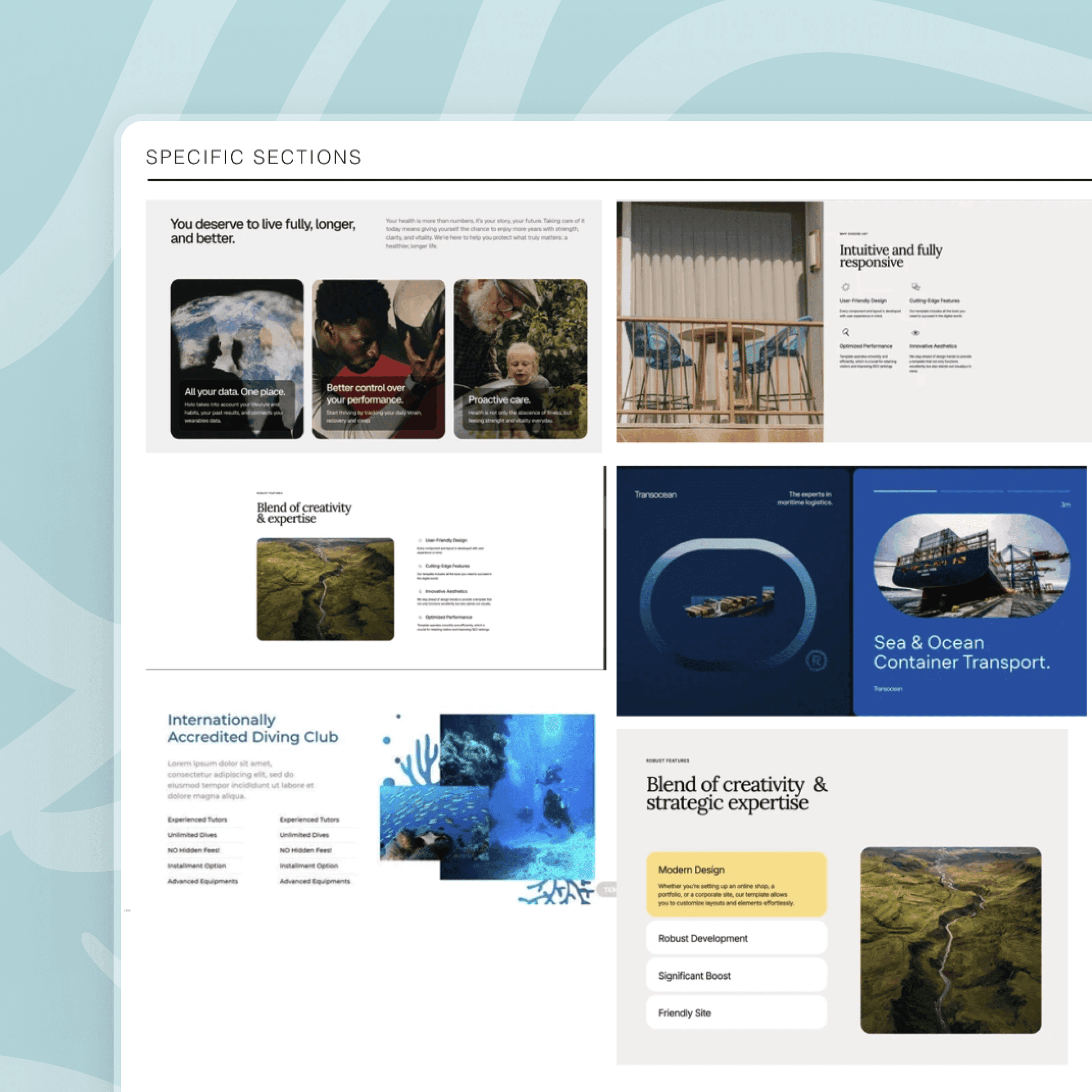
The two principles that drove the Oyster Heaven redesign
Throughout the redesign, two things kept coming back: simplicity and narrative.
Oyster Heaven had a lot to say about their technology, their science-based approach, their process and their results. But not everything could be highlighted at once or the impact of their work would get lost in the noise. So, I restructured layouts, shortened copy and built new sections to make sure the right information landed at the perfect moment and that every page pointed visitors toward a clear next step.
To me, the homepage was the hardest to get right. As the first page visitors see and the first step of the redesign, it set the tone for everything that followed. My instinct as a designer was to push into a creative direction that was further than what the project scope allowed. Looking back, what helped was presenting multiple versions with clear reasoning for each, making the thinking visible rather than just the outcome. This decision gave Oyster Heaven's Marketing Lead, Veronika Labody, something concrete to react to and helped us reach a direction that felt like a genuine redesign without straying from Oyster Heaven's vision.
The process of showing the work in progress shaped how the whole collaboration ran. Every Thursday, Veronika and I would get on a call to go through the new designs together. This became the moment where we reached real decisions as we discussed what was in front of us and pushed things further or pulled them back together. This rhythm, week by week, is what got the project to where it needed to go. It also reinforced to me that the best feedback loops only exist when both sides involved are genuinely invested in seeing a vision come to life.
Handed over, not just launched
The deliverable was never just a website. Alongside the redesigned pages, I put together a comprehensive handover document in Google Docs and a series of video walkthroughs so that anyone on Oyster Heaven's team could manage the website confidently from day one, regardless of their experience with Framer.
From the beginning, the goal was that nobody on their team should ever need me or the team at Concealed to keep their website running. The handover was where this intention became something concrete. Preparing the document alongside the website launch was one of the more demanding aspects of the project, but also one of the most satisfying to complete. This is the reason our team at Concealed loves using Framer and have become Framer Experts: to provide the best service while allowing our clients to have full maintenance autonomy.

What I learned from leading this project
When the website went live, a month's worth of effort suddenly felt concrete. Seeing something I had worked on get launched, being there to answer questions and watching it become something other people could use and understand without me truly showed me what it feels like to lead a project.
As with any project, there are things I would approach differently. I would take more creative risk early on, before feedback cycles narrowed the space for it. I would be more structured about syncs and discussions to avoid time getting overused with feedback loops. And I would pay closer attention to the details that only surface after launch. These are the lessons that come with leading something for the first time, and I know learning them this early on in my career will only improve all of my future work.
The result is something I am genuinely proud of. But more than the work itself, this project reinforced that the job does not start or end with design and execution. The focus should always be to make someone's vision come to life and leave them confident enough to carry it forward on their own. That is what drives this work, no matter whether the client is restoring oceans or running a small local business. The point is, and always will be, people.
Frequently Asked Questions
What does a Framer website redesign involve?
A Framer website redesign starts with a full audit of the existing site — structure, copy, visual hierarchy, and how well each page moves visitors toward a clear next step. From there, we redesign layouts, restructure content, and rebuild in Framer. The deliverable isn't just a new design: it includes a handover document and video walkthroughs so the client's team can manage the site independently.
How long does a Framer website redesign take?
The Oyster Heaven redesign took four weeks from kickoff to handover. Most full website redesigns we take on run between three and six weeks, depending on the number of pages and the complexity of the content. Working directly in Framer removes the handoff step between design and development, which is where most timeline delays happen.
Can clients manage their Framer website after the project ends?
Yes — that's a deliberate goal in how we build. For Oyster Heaven, we prepared a comprehensive handover document in Google Docs and a series of video walkthroughs covering every part of the site. Anyone on their team can make changes, add content, and maintain the site without needing Concealed. Framer's editor is built for non-technical users, and we build with that in mind.
What is a Framer Expert?
Framer Experts is a verified programme for studios and freelancers recognised by Framer for the quality of their work on the platform. Concealed is a listed Framer Expert studio, which means we've been vetted for both design quality and technical execution on Framer projects.
How do you redesign a website without losing the brand identity?
We start from what's already working — existing brand assets, tone of voice, and visual direction — and rebuild the structure around them. For Oyster Heaven, the brand character was already strong; the website just wasn't carrying it consistently across pages. The redesign kept the identity and fixed the structure, not the other way around.
What's the difference between a Framer redesign and a rebuild on WordPress or Webflow?
In Framer, design and development happen in the same tool, so there's no handoff between a designer and a separate developer who rebuilds the work from scratch. This makes redesigns faster, cheaper, and less prone to translation errors between what was designed and what gets built. It also means the finished site is easier for non-technical clients to manage after launch.
Written by Daniela Nunes, designer at Concealed — a Framer Expert studio based in Lisbon building fast, scalable websites and custom internal tools.
Ready to move faster without compromising quality?
We work with ambitious teams to design and build digital products — fast, in-house, and with measurable results.