
I've known Nuno for 16 years. We met through a mutual friend at university and stayed in touch the way you do with some people, sporadically but warmly, watching each other's lives take shape from a distance.
He went into his family's business: Grafibeira, a print shop in Oliveira do Hospital that his father founded over four decades ago. I started Concealed, a design and development studio in Lisbon. Different paths, but the same kind of commitment to the thing we'd each ended up running.Earlier this year he called me.
He wanted to build something, a system to manage production on the factory floor. What they had was working, but only just. Paper job sheets, spreadsheets updated by hand, status checks shouted between departments. For 44 years that was how it ran, and for 44 years it was enough. But order volume was growing and the margin for error was shrinking.
The custom production system we built for Grafibeira
The goal was simple: let everyone see where every job actually stood, at any moment, without having to ask.
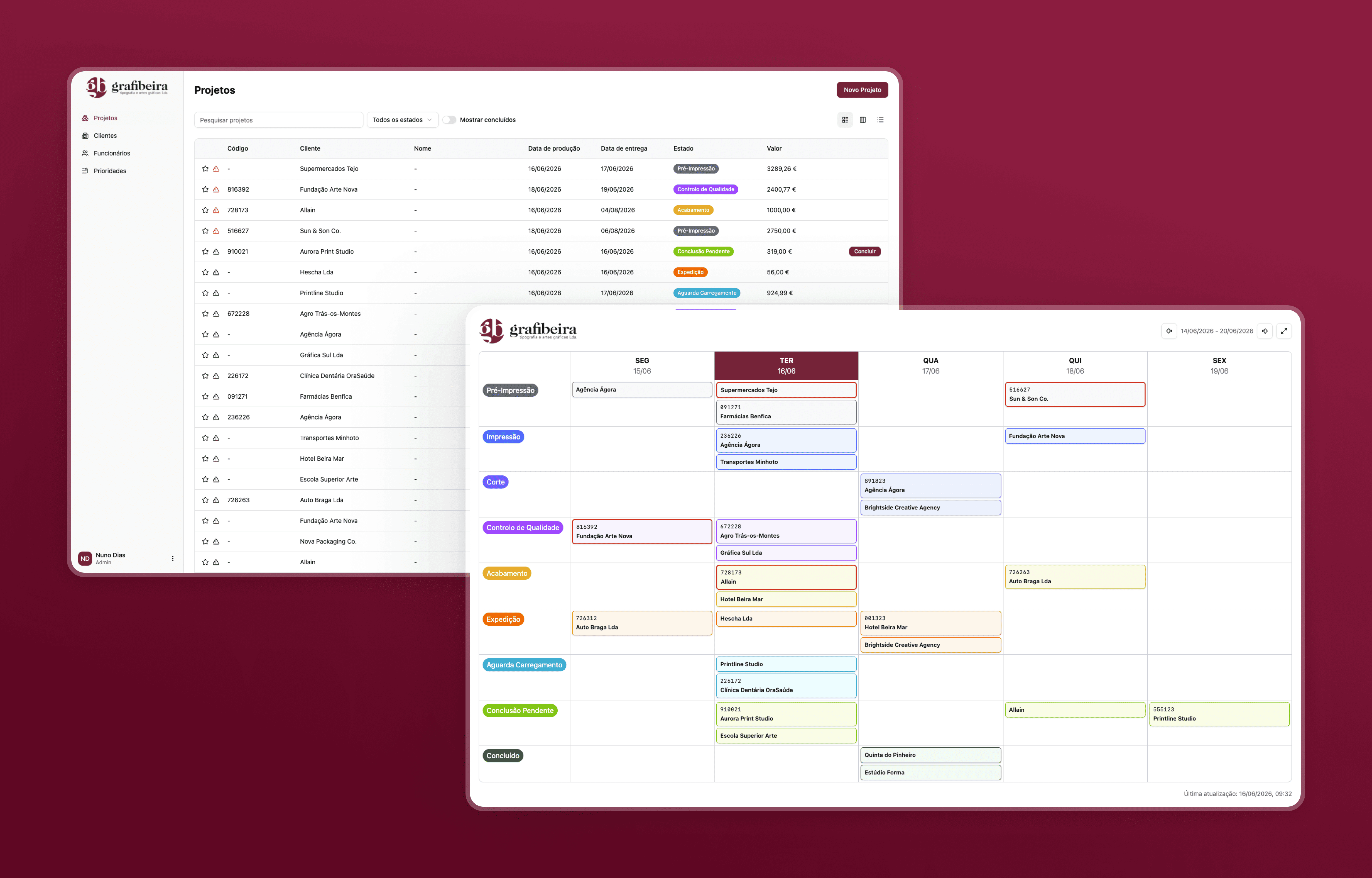
Every job now moves through a defined sequence of stages, from pre-press through printing, finishing, quality check, shipping, and invoicing. No job skips a step. Every transition is logged against the individual employee's PIN, so there's a full record of who did what and when. "Who shipped this?" stopped being a question anyone had to ask.
At the shipping stage we added a QR code system. Every package gets a unique code generated during finishing, and a shipment can only be completed once every code has been scanned. One missing scan and the system stops. It sounds small, but the effect isn't: counting errors in a print shop mean returns and doubled work, and now they don't happen.
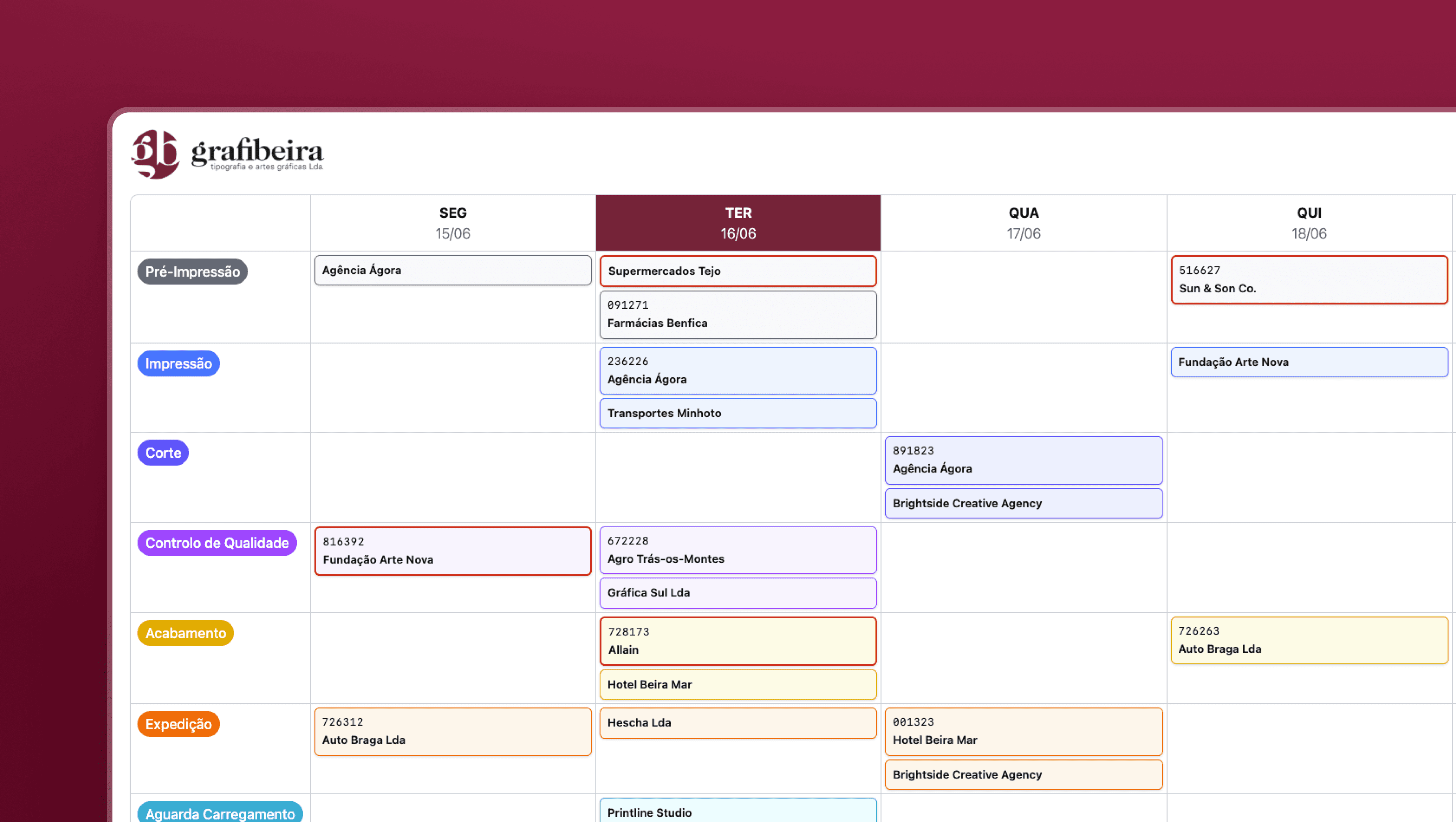
For the managers, we built a real-time production panel that lives on screens around the floor. At any moment they can see exactly where every job stands, without interrupting anyone or guessing.
We built it in four weeks.


What two hours saved every day looks like on the factory floor
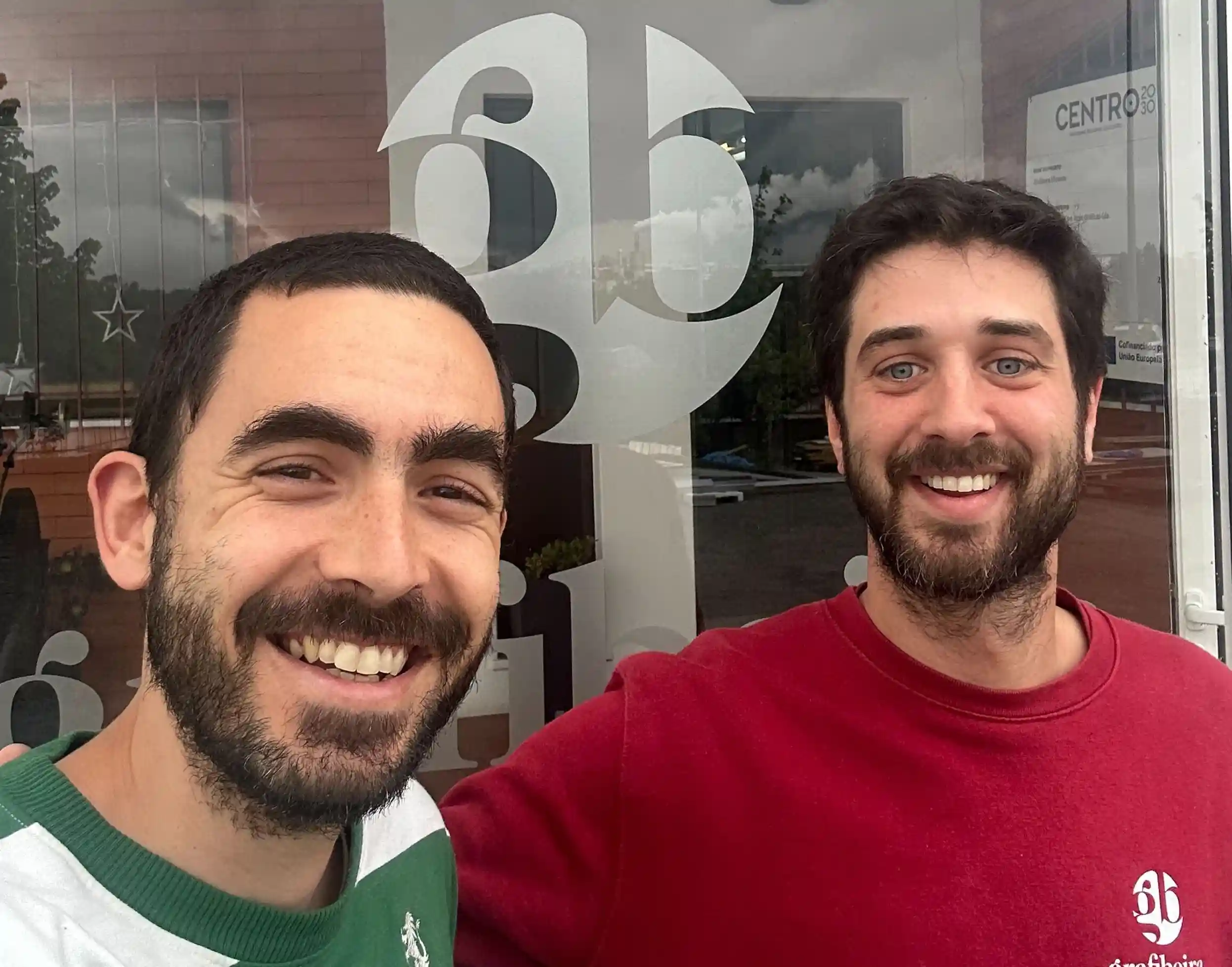
In April I drove up to Oliveira do Hospital to see the system running in the place it was built for.
There's a difference between knowing something works and seeing it work. The floor is loud, the pace doesn't let up, everyone on it is moving. And in the middle of all that, the system was just there, doing its job quietly while everyone did theirs.
Nuno's team had already told us they were saving two hours a day. Standing there, I could see exactly where those two hours came from. The questions nobody needed to ask anymore. The counts that only happened once. The manager checking the panel on the wall instead of walking the floor to find out.
The kind of small daily friction that used to add up without anyone noticing, gone, replaced by something that just works.
That visit led to a second phase, another 90 hours of features: a production calendar, a kanban view, client-facing pages, and inspection sheets. Once a team starts trusting a tool, they start imagining what else it could do.
What 44 years of business taught me about building software that lasts
What stayed with me from this project wasn't the technical side. It was the 44 years. Grafibeira didn't last four decades by accident. They lasted by adapting, to new equipment, to changing client demands, to the slow digitalization of an industry that used to run entirely on craft and instinct.
This system is one more adaptation. A small one, in the scheme of things. But it's theirs now, and it works the way they work.
Concealed is nine years old. I still can't picture what 44 looks like. We're grateful to be part of the journey.
Frequently Asked Questions
What is a custom production management system?
A custom production management system is software built to track and coordinate work through a manufacturing or fulfilment process. Unlike generic project management tools, it's designed around the specific stages, roles, and workflows of one business — so staff can see exactly where every job stands without asking, and managers have a real-time view of the floor without interrupting anyone.
How long does it take to build a custom internal tool?
The Grafibeira production system was built in four weeks. Most custom internal tools we scope and build take between three and eight weeks, depending on the number of integrations and the complexity of the workflows involved. Because we've built similar systems before, we move through familiar problems quickly.
Can a custom system replace spreadsheets in a manufacturing business?
Yes, and in most cases it removes the problems that make spreadsheets break at scale: manual data entry, version conflicts, limits on who can update what at the same time, and the inability to log who did what and when. A system built around how the business actually works is faster to use, harder to get wrong, and gives managers real-time visibility they can't get from a shared file.
How do you measure the return on a custom internal tool?
The most direct measure is time saved per day multiplied by the cost of that time. Grafibeira's team saved two hours a day across the floor. Beyond time, tools that reduce counting errors, returns, and the management overhead of chasing status updates have compounding value that's harder to quantify but equally real.
What did Concealed build for Grafibeira?
We built a production management system that tracks every print job through six stages — pre-press, printing, finishing, quality check, shipping, and invoicing. Every stage transition is logged against an employee PIN. Shipping uses a QR code system that prevents jobs leaving without a complete scan. Managers see a real-time production panel on screens around the floor. A second phase added a production calendar, kanban view, client-facing pages, and inspection sheets.
How much does a custom internal tool cost?
We provide a fixed scope and budget before any work begins, so there are no billing surprises. The cost depends on the complexity of the workflows, the number of user roles, and the integrations required. We price for small and medium businesses, not enterprise — the goal is to make custom software genuinely affordable for teams that need it but can't justify six-figure off-the-shelf alternatives.
Written by João Saraiva, CEO at Concealed — a Framer Expert studio based in Lisbon building fast, scalable websites and custom internal tools.

Concealed's solution helped us reduce time and increase productivity, saving two hours every day and giving us full control over our orders and processes. Their team was attentive, practical and fast, helping us in every step of the way.

Nuno Dias
Manager
Ready to move faster without compromising quality?
We work with ambitious teams to design and build digital products — fast, in-house, and with measurable results.